
Today, Achieve is releasing drafts of the Next Generation Science Standards (NGSS), an attempt to create “common,” multi-state standards for that critical subject. (It’s not part of the separate Common Core initiative for reading and math.) Using a framework developed by the National Research Council (and reviewed by Fordham last fall), experts from twenty-six Lead State Partners worked with Achieve to draft the new standards, supposedly “rich in content and practice, arranged in a coherent manner across disciplines and grades to provide all students an internationally-benchmarked science education.”
It remains to be seen whether these common standards willl avoid the pitfalls that plague too many state standards; their "commonness" alone certainly doesn't guarantee they will be better than existing standards. Still, this is a crucial step in a multi-year process, one that may significantly alter American science education—and it couldn’t come at a better time. Fordham will be publishing a formal review of the draft standards in coming weeks (and Achieve is soliciting feedback, so sharpen your pencils), but regardless of how the NGSS drafts stack up, something needs to change. Our recent study of state science standards in every state revealed a dismal situation: A majority of states received a D or F grade in the review, with the national average a low C. States will need to think hard about whether they can live with the status quo—and whether the NGSS offers a viable alternative.
To give a better sense of the decisions states will need to make in the coming months, this table provides the state science ratings from our State of State Science Standards 2012 report, divided by a state’s participation in the NGSS drafting process as lead state partners. (For more information on the grading rubric and explanations of each states grades, download the full report.)
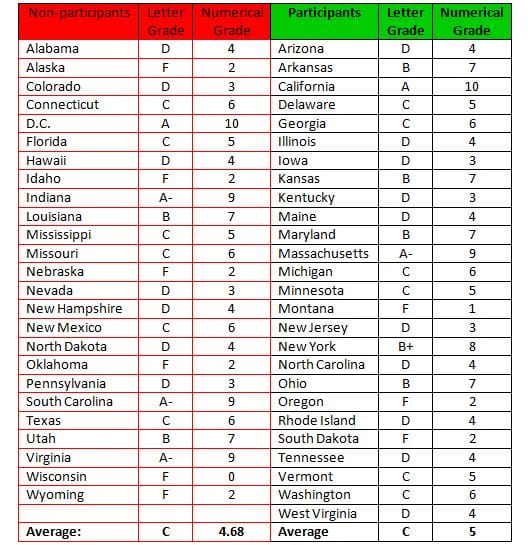
Perhaps surprisingly, the Lead State Partners are actually in slightly better shape than those states that sat the standards-development process out, but both groups are, on average, mediocre. States with lousy standards—yes you, Wisconsin—will need to consider if they can afford to sit on the sidelines, while stars like California must weigh the possibility that new common standards will actually be a step down. All that’s certain is some action is necessary to ensure America’s next generation of scientists makes the grade.
